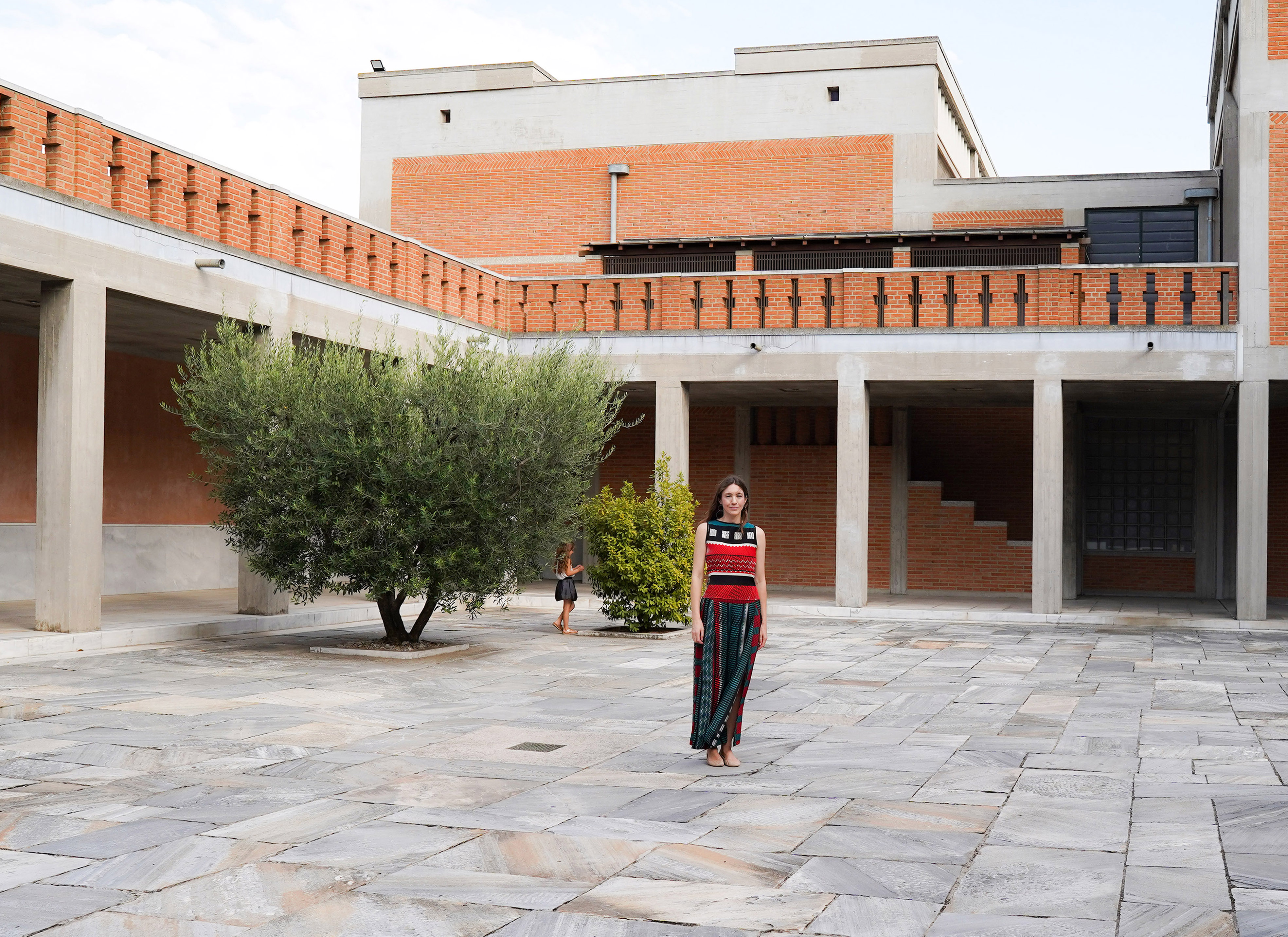
Every space contains its architecture. Architecture and its materiality shapes and connects us to place, memory and identity.
Before a line is drawn, the practice of Nora Òkka attends to what is already present — the stones worn smooth by the elements, the timber carrying the patina of exposure, the masonry fragments awaiting a second life. Each site holds a latent architecture within its existing material conditions. The work is the act of drawing it out.
This is not preservation, nor is it nostalgia. It is something more precise: regenerative architecture. The birth of something entirely new from elements that have lived previous lives. The formal language is resolutely contemporary — the geometry modern, the spatial ambitions belonging entirely to the present. What travels from the past is the matter, not the manner. Old stones, their material and form are arranged according to new logics. Salvaged timber is joined with precision unavailable to earlier builders. The contrast between reused material and modern form is not a contradiction. This evolving language of abstraction is the source of architectural tension and vitality.
Every project begins with an inventory. A rigorous survey of what the site already offers — its climate, its topography, its culture, and crucially, its construction fragments. Hyperlocal material sourcing is not simply an environmental commitment, though it is that too. It is a cultural one. When materials are drawn from the immediate context of a site — its quarries, its demolished structures, its accumulated building history — the resulting architecture carries the lineage of that place. It speaks the local material language. It reflects the textures, tones, and craft traditions that have been passed down through generations, rooted in the soil and stone of a community's deepest history. The architecture cannot be transplanted elsewhere. It belongs.
Just as provenance authenticates a work of art, the buildings of Nora Òkka carry material provenance — a traceable lineage connecting each component to its origin. This transparency transforms construction into an act of memory. Cracks, wear patterns, and material inconsistencies are not deficits to be concealed. They are evidence of a life already lived, and they become the ornament. The building's beauty arises from the authenticity of its components and the honesty with which they are employed.
Design and construction are not sequential phases here — they are integrated. The selection of salvaged material informs the architectural synthesis from the outset. Structural logic, spatial organization, and aesthetic expression evolve together, responding to the specific dimensions, textures, and quantities of what is available. This iterative process ensures that no two projects are alike. Each is birthed uniquely from its particular material conditions.
The materials themselves — weathered stone, salvaged timber, ceramic fragments, oxidized metal — are not romantic choices. They are pragmatic ones. Materials that have endured decades of exposure are likely to endure decades more. And they carry within them an atmosphere that cannot be manufactured. A wall of reclaimed limestone absorbs sound differently than poured concrete. A floor of salvaged oak reflects light at angles determined by years of wear. The circular materiality develops the experiential reality of the space.
Every building poses a question: what does this place want to become? The practice of Nora Òkka answers that question from the ground up — grounding each project in materials that carry memory, that resist disposability, and that give the finished work an identity rooted in the culture and geography of where, specifically, it stands. These materials carry stories across time.
Architecture with provenance. Buildings that belong. To build your own provenance contact@noraokka.com